Home & Living
How to Create a Turkish-Inspired Living Room: 7 Key Elements
Feb
Creating a Turkish-inspired living room is one of the most rewarding ways to bring warmth, colour, and cultural richness into your home. Ottoman and Turkish design is characterised by vibrant jewel tones, intricate geometric patterns, luxurious textiles, and a layered approach to decoration that creates spaces which feel both opulent and welcoming. Whether you are starting from scratch or adding Turkish touches to an existing room, these seven key elements for how to create a Turkish inspired living room will help you achieve an authentic Ottoman aesthetic.
1. Start with a Mosaic Lamp
Nothing sets the mood of a Turkish-inspired room quite like a handmade mosaic lamp. These stunning light fixtures are crafted from hundreds of small coloured glass pieces set into a metal frame, and when lit, they cast mesmerising patterns of coloured light across walls and ceilings.
Traditional Turkish mosaic lamps come in several styles: hanging pendant lamps (ideal above dining tables or in entryways), table lamps, and floor-standing versions. The most authentic examples feature jewel-toned glass in rich blues, reds, ambers, and greens. For maximum impact, consider grouping several lamps of different sizes and colours together — in Turkish bazaars, you will always see these lamps displayed in clusters, and the effect is magical.
Place your mosaic lamp where it can be appreciated both lit and unlit. Even during the day, the intricate glasswork makes these pieces beautiful decorative objects in their own right.
2. Add İznik Ceramic Accents
İznik ceramics are among the most iconic art forms of the Ottoman Empire. Incorporating ceramic pieces into your living room adds an immediate connection to five centuries of Turkish artistic tradition.
Consider displaying decorative plates or bowls on a wall shelf or plate rail. Classic İznik designs feature tulips, carnations, and arabesques in cobalt blue, turquoise, and red on white. A single large decorative plate can serve as a stunning focal point above a fireplace or sofa, while a collection of smaller pieces creates a gallery-style display.
For a more subtle approach, ceramic coasters, vases, or trinket dishes placed on coffee tables and side tables bring Turkish artistry into everyday moments. Look for pieces that feature the traditional colour palette of blue, turquoise, red, and white for the most authentic feel.
3. Hang a Nazar Amulet
The Nazar Boncuğu (Evil Eye charm) is both a protective talisman and a beautiful design element. In Turkish homes, you will find these cobalt blue glass amulets hanging near doorways, in living rooms, and by windows.
For your living room, consider a large decorative Nazar — 15cm or larger — hung on the wall as a statement piece. Alternatively, a Nazar wall hanging combining multiple glass beads with macramé or beadwork creates a bohemian-meets-Turkish aesthetic that works beautifully in contemporary interiors. The deep blue of the Evil Eye also provides a perfect accent colour that pairs naturally with the other jewel tones in Turkish design.
4. Layer Your Textiles
Layering textiles is perhaps the most important principle in Turkish interior design. Ottoman rooms were historically draped with carpets, kilims, cushions, and fabrics that created a sense of enveloping warmth and luxury.
Start with a Turkish kilim rug as your foundation — these flat-woven textiles feature bold geometric patterns in rich colours and provide both visual interest and warmth underfoot. Layer a smaller rug on top for added depth. Then pile your sofa with suzani cushions and kilim-covered pillows in complementary patterns.
Do not be afraid to mix patterns — in Turkish design, combining different geometric and floral motifs is encouraged, provided they share a common colour palette. Add a woven throw in a warm tone draped over an armchair, and perhaps a tapestry or textile wall hanging as a backdrop.
5. Display Culture Books and Art
A curated selection of coffee table books on Turkish art, Ottoman history, and Islamic architecture serves a dual purpose: they are fascinating reading material and they contribute to the visual aesthetic of the room. Stack two or three books on a tray alongside a small ceramic bowl or Nazar bead for an effortless styled vignette.
For wall art, look for canvas prints or framed photographs of iconic Turkish scenes — the interiors of the Blue Mosque or Hagia Sophia, the colourful streets of Istanbul, or close-up details of İznik tilework. Ottoman calligraphy prints also make sophisticated art pieces that add cultural depth to your walls. A large-format canvas print of a mosque interior can serve as the centrepiece of an entire room.
6. Use Warm Metallics
Ottoman design makes generous use of metalwork, particularly in brass, copper, and gold. These warm metallic tones tie the whole Turkish aesthetic together and add a luxurious finish to the room.
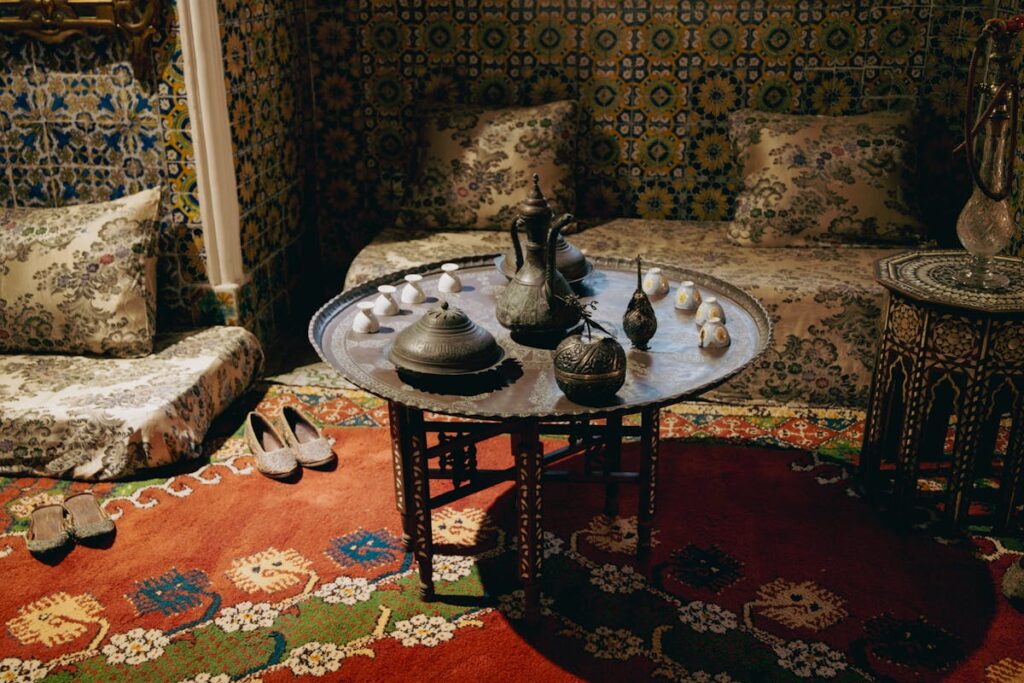
Consider incorporating a Turkish-style brass tray table — these low, circular trays on folding stands are both practical and decorative, perfect for serving Turkish tea or displaying ornaments. Copper bowls and brass lanterns add authentic touches, while gold-framed mirrors or picture frames elevate the look.
A traditional Turkish tea set in copper or brass, displayed on a shelf or tray, is both functional and decorative. The ritual of serving Turkish tea (çay) is such a central part of the culture that having a beautiful tea set in your living room pays homage to this important tradition.
7. Mix Old and New
The most successful Turkish-inspired interiors blend traditional Ottoman elements with contemporary design. You do not need to recreate a palace room — instead, choose a few key Turkish pieces and let them shine against a modern backdrop.
A minimalist grey sofa piled with kilim cushions, a sleek coffee table topped with a brass tray and ceramic bowls, or a contemporary white wall adorned with a vibrant mosaic lamp and Nazar wall hanging — these contrasts between old and new create rooms that feel both timeless and fresh.
The key is restraint and curation. Select pieces that speak to you personally and that represent the aspects of Turkish culture you find most beautiful. A few well-chosen elements will always create a more impactful and authentic space than an overwhelming collection of themed items.
Budget Guide: What to Expect
Creating a Turkish-inspired living room can be done at various price points:
- Budget-friendly (£50–£150): Start with a few kilim cushion covers, a decorative Nazar, and a small ceramic piece
- Mid-range (£150–£500): Add a mosaic lamp, a kilim rug, canvas wall art, and a brass tray set
- Premium (£500–£2,000+): Invest in a handmade Turkish carpet, multiple mosaic lamps, and museum-quality ceramic reproductions
At Topkapı, we have curated a collection of Turkish-inspired products at accessible price points, all available through Amazon UK. Browse our full collection to start designing your own Ottoman-inspired space.
Frequently Asked Questions
How do I create a Turkish-inspired room on a budget?
Start small with a few key pieces: a set of kilim cushion covers, a decorative Nazar Boncuğu, and perhaps a small ceramic bowl or plate. These affordable items can instantly add Turkish character to any room. As your budget allows, add a mosaic lamp and a kilim rug for greater impact.
Can I mix Turkish decor with other styles?
Turkish design elements blend beautifully with many other styles. They pair particularly well with Mediterranean, bohemian, mid-century modern, and Scandinavian interiors. The key is to treat Turkish pieces as accent elements that add warmth and colour to your existing aesthetic.
Where can I buy authentic Turkish home decor in the UK?
At Topkapı, we curate a selection of Turkish-inspired home décor products available through Amazon UK, offering trusted checkout, delivery, and returns. You can also find pieces at specialist import shops, Turkish cultural festivals, and online marketplaces that work directly with Turkish artisans.
What colours work best for a Turkish-inspired room?
The classic Ottoman palette includes deep cobalt blue, turquoise, ruby red, emerald green, and gold. These jewel tones work best against warm neutral backgrounds such as cream, ivory, or warm grey walls. Start with one or two accent colours and build from there.
